
News Summary
Tesla Robotaxi LLC has been granted a permit to operate its ride-hailing service in Austin by the Texas Department of Licensing & Regulation. While the permit allows the use of automated vehicles for ride-hailing, further authorization is needed for full autonomous vehicle classification. A new state bill aimed at regulating autonomous vehicle services will come into effect shortly, addressing safety and compliance. Despite initial concerns from lawmakers, Tesla has proceeded with a limited launch of its services. The company faces ongoing scrutiny and competition from other players in the autonomous vehicle market.
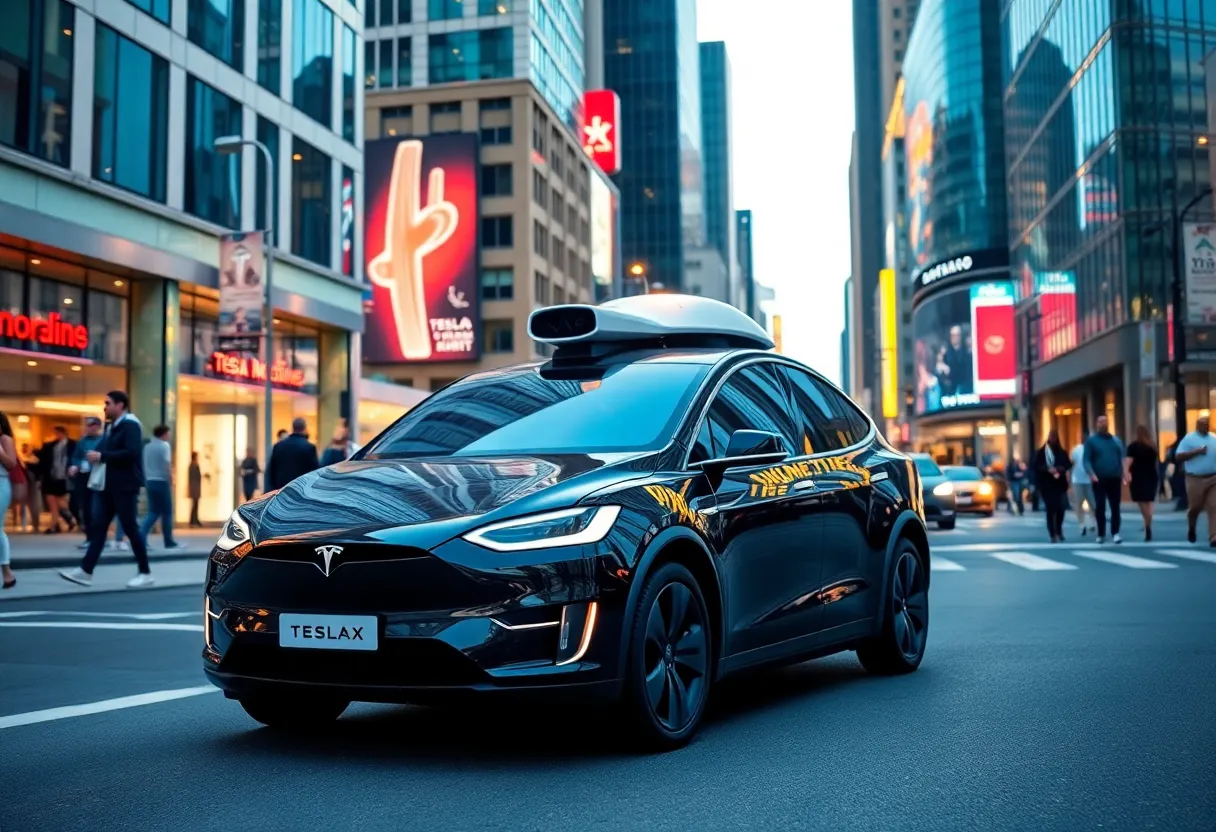
Texas has officially granted Tesla Robotaxi LLC a permit to operate its ride-hailing service featuring autonomous vehicles, as confirmed by the Texas Department of Licensing & Regulation (TDLR). This license, which allows Tesla to function as a transportation network company similar to players like Uber and Lyft, is valid for one year and is set to expire on August 6, 2026.
Although the permit opens the doors for Tesla to implement a commercial ride-hailing service, it does not classify the company’s robotaxi fleet as fully autonomous vehicles at this stage. The permit allows for the use of automated motor vehicles, but for Tesla to officially label its vehicles as autonomous, they must secure authorization from the Texas Department of Motor Vehicles (DMV).
New Regulations in Texas
The recent landscape for autonomous vehicle operations in Texas has been reshaped by a new state bill, SB 2807, which took effect on September 1, 2023. This legislation establishes a comprehensive framework for the commercial use of autonomous vehicles and sets safety standards that operators must adhere to. Notably, the bill mandates that driverless vehicle operators must comply with federal vehicle safety protocols and incorporate data recording devices in their vehicles.
Prior to the legislation coming into effect, seven Democratic state lawmakers expressed concerns about the timing of Tesla’s service launch. They urged the company to either postpone the rollout until new regulations were established or provide proof of compliance with existing laws. Nonetheless, Tesla moved forward with the launch in June, conducting a limited pilot program in Austin that involved a small fleet of Model Y vehicles, all overseen by human safety supervisors from an operations center.
Operational Context and Safety Concerns
During the pilot phase, some incidents have been reported where Tesla’s autonomous vehicles disobeyed traffic rules. While these occurrences have attracted federal attention, there have been no reports of serious damage or injuries linked to the robotaxi service. As Tesla navigates the evolving regulatory landscape, it remains a focal point for discussions surrounding safety and commercial viability in the autonomous vehicle sector.
Following the announcement of its rideshare license, Tesla’s stock saw a nearly 2% uptick. This positive reaction emphasizes investor interest in the advancements Tesla is making in the autonomous vehicle market, especially in Texas, which aims to foster a more favorable regulatory climate for such operations compared to states like California.
Growing Competition and Future Plans
As Tesla embarks on its robotaxi service in Texas, it faces competition from other autonomous vehicle companies, including Waymo, which are also eyeing the Texas market. Tesla’s plans for broader expansion of its robotaxi service could extend to additional states such as Nevada, Arizona, California, and Florida, should the initial phase prove successful.
However, Tesla continues to grapple with a series of challenges, including ongoing federal investigations into the Autopilot system, as well as several lawsuits relating to product liability that could impact the company’s operational framework moving forward. Additionally, the company has experienced an 18% decline in stock performance this year, marking it as one of the worst-performing stocks among major technology companies, despite recent licensing developments.
As the state of Texas continues to evolve its regulatory measures surrounding autonomous vehicles, Tesla’s ability to adapt and capitalize on the growing interest in robotaxi services will be pivotal for its future success in an increasingly competitive landscape.
Deeper Dive: News & Info About This Topic
- CNBC: Tesla Robotaxi Scores Permit in Texas
- Bloomberg: Tesla Secures Texas Rideshare Permit
- Seeking Alpha: Tesla Lands Key Robotaxi License in Texas
- TipRanks: Tesla Bags Texas Rideshare License
- Business Insider: Tesla Robotaxi Gets Texas Permit
- Wikipedia: Robotaxi
- Google Search: Tesla Robotaxi
- Encyclopedia Britannica: Autonomous Vehicle
- Google Scholar: Tesla Robotaxi
- Google News: Tesla Robotaxi


Author: STAFF HERE COLLEGE WRITER
The COLLEGE STATION STAFF WRITER represents the experienced team at HERECollegeStation.com, your go-to source for actionable local news and information in College Station, Brazos County, and beyond. Specializing in "news you can use," we cover essential topics like product reviews for personal and business needs, local business directories, politics, real estate trends, neighborhood insights, and state news affecting the area—with deep expertise drawn from years of dedicated reporting and strong community input, including local press releases and business updates. We deliver top reporting on high-value events such as the Brazos Valley Fair & Rodeo, Chilifest, and Aggie Muster. Our coverage extends to key organizations like the Bryan-College Station Chamber of Commerce and United Way of the Brazos Valley, plus leading businesses in education, biotechnology, and retail that power the local economy such as Texas A&M University, Fujifilm Diosynth Biotechnologies, and H-E-B. As part of the broader HERE network, including HEREAustinTX.com, HEREDallas.com, HEREHouston.com, and HERESanAntonio.com, we provide comprehensive, credible insights into Texas's dynamic landscape.