
News Summary
Texas is witnessing a surge in its data center industry, driven by increasing demand for artificial intelligence and digital services. Major investments, such as the $500 billion Stargate project in Abilene, promise to boost local economies and create thousands of jobs. However, this boom raises concerns related to sustainability and energy requirements, as the influx of data centers will significantly impact Texas’ resources and infrastructure. The need for thoughtful regulation and investment in infrastructure is critical to ensure Texas can manage this rapid growth effectively.
Texas is witnessing a remarkable surge in data center development, largely driven by the soaring demand for artificial intelligence (AI) and digital services. This data center boom is not only shaping the technology landscape but is also expected to generate significant economic benefits for local businesses across the state.
As Texas becomes a major hub for tech companies and data centers, economists like Dr. Dean Stansel predict a positive ripple effect on local economies. For instance, the NTT Global Data Center in Garland is anticipated to attract more customers to neighboring businesses such as Bajio Cocina and Bar. The data center influx has created optimism among local entrepreneurs who foresee increased foot traffic and sales opportunities.
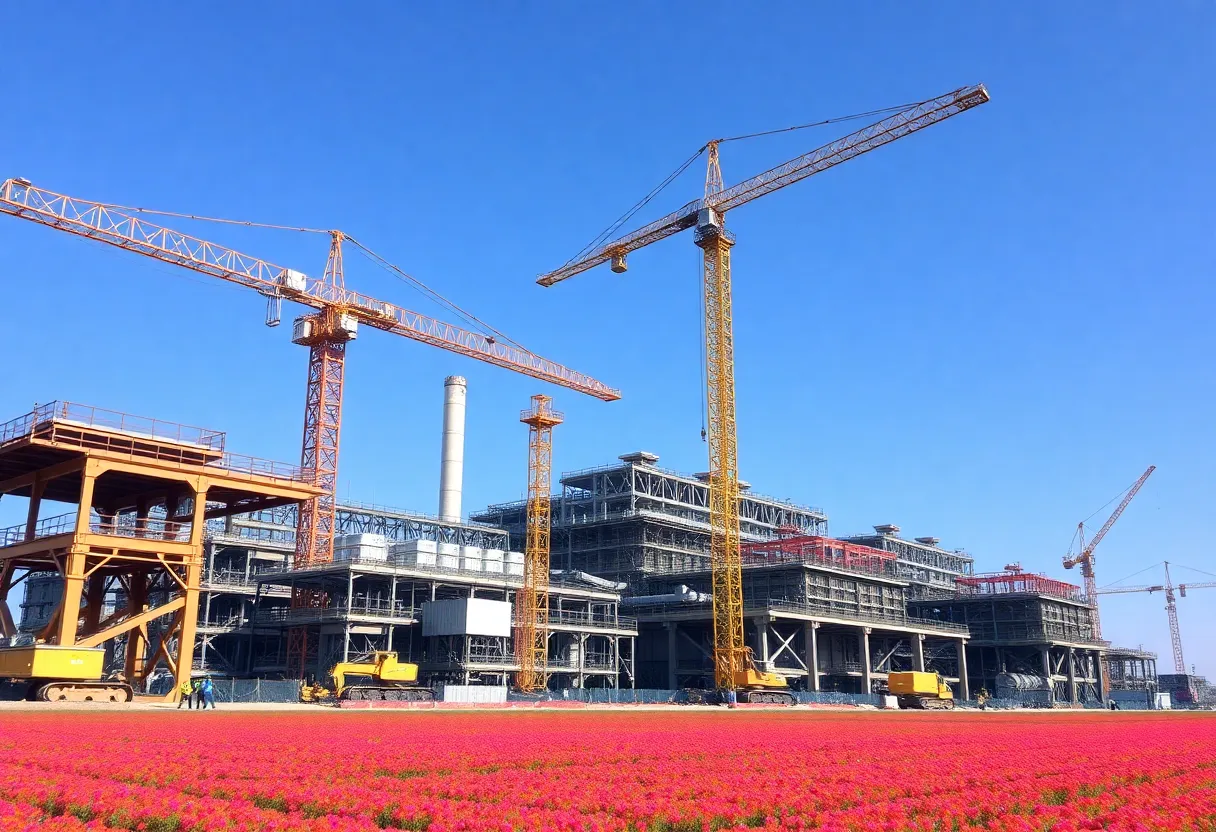
Notably, the Stargate project is making headlines with its projected $500 billion investment in data centers across Texas. Once completed, it is expected to be the largest data center in the world, located in Abilene, Texas. This ambitious initiative will not only bolster local employment but also aims to utilize advanced technology infrastructure to support AI operations.
Furthermore, Nvidia’s partnership with OpenAI, among other manufacturers, signals a pivotal shift in technological production within Texas. The establishment of supercomputer factories underscores the state’s commitment to leading the AI revolution. These data centers are diversifying local economies, promising significant demand across various sectors such as restaurants, grocery stores, and healthcare providers. The continuous growth of data centers creates a need for multiple goods and services, showcasing the interconnected nature of the tech economy.
Dr. Stansel attributes Texas’ appeal to its competitive business landscape, which includes no income tax and relatively light business regulations. Many leading tech firms are drawn by these favorable conditions, further solidifying Texas’ position as a top destination for data center investments. However, the rapid expansion of data facilities raises pressing concerns regarding increased energy demands and potential tariffs that may affect the industry’s growth.
Local business owners have voiced their concerns about enhancing the economy beyond mere data center construction. Discussions around improving wages and tax structures are underway, illustrating the diverse perspectives on how best to support economic growth in the state. Additionally, the substantial energy and water usage associated with data centers has prompted environmentalists to call for stricter regulations. With Texas facing ongoing drought conditions, advocates suggest that data centers should be responsible for producing their own energy and water to mitigate environmental impacts.
The groundbreaking Abilene data center, which incorporates Oracle Cloud infrastructure and Nvidia chips, presents significant scalability prospects exceeding 1 gigawatt of capacity. Furthermore, OpenAI plans to construct five additional Stargate sites across Texas, New Mexico, Ohio, and another Midwestern location. This initiative is expected to necessitate nearly 9 gigawatts of additional electricity, which parallels the power consumption of about half a million U.S. homes.
Looking ahead, future infrastructure projects are deemed crucial for sustaining the technology boom. The Stargate project is poised to employ over 6,000 construction workers daily and provide approximately 1,700 long-term positions, significantly impacting job creation in the region. With OpenAI’s projected revenue of $13 billion this year, the company plans to finance construction partially through cash flow and debt financing, signifying a robust investment strategy.
Overall, the Stargate project has implications that could reshape the American power grid while influencing the global technology landscape. Nonetheless, critiques surrounding the economics and sustainability of the interconnected funding within the Stargate initiative reveal ongoing debates about the long-term viability of such expansive investments.
Historical parallels with the internet boom suggest that ambitious infrastructure projects are necessary for advancing technology. As the data center industry continues to expand in Texas, the outcomes will likely determine the future trajectory of both local economies and the broader tech sector.
Deeper Dive: News & Info About This Topic
- Spectrum Local News: Texas Data Center Boom
- Google Search: Texas Data Centers
- CNBC: OpenAI’s First Data Center
- Wikipedia: Data Center
- AP News: Big Tech Data Centers
- Encyclopedia Britannica: Data Center
- KWTX: $700 Million Data Center in Temple
- Google News: Texas Data Centers 2025
- Statesman: Water Supply for Data Centers
- Google Scholar: Data Centers Texas


Author: STAFF HERE COLLEGE WRITER
The COLLEGE STATION STAFF WRITER represents the experienced team at HERECollegeStation.com, your go-to source for actionable local news and information in College Station, Brazos County, and beyond. Specializing in "news you can use," we cover essential topics like product reviews for personal and business needs, local business directories, politics, real estate trends, neighborhood insights, and state news affecting the area—with deep expertise drawn from years of dedicated reporting and strong community input, including local press releases and business updates. We deliver top reporting on high-value events such as the Brazos Valley Fair & Rodeo, Chilifest, and Aggie Muster. Our coverage extends to key organizations like the Bryan-College Station Chamber of Commerce and United Way of the Brazos Valley, plus leading businesses in education, biotechnology, and retail that power the local economy such as Texas A&M University, Fujifilm Diosynth Biotechnologies, and H-E-B. As part of the broader HERE network, including HEREAustinTX.com, HEREDallas.com, HEREHouston.com, and HERESanAntonio.com, we provide comprehensive, credible insights into Texas's dynamic landscape.