
Columbus, Ohio, October 24, 2025
News Summary
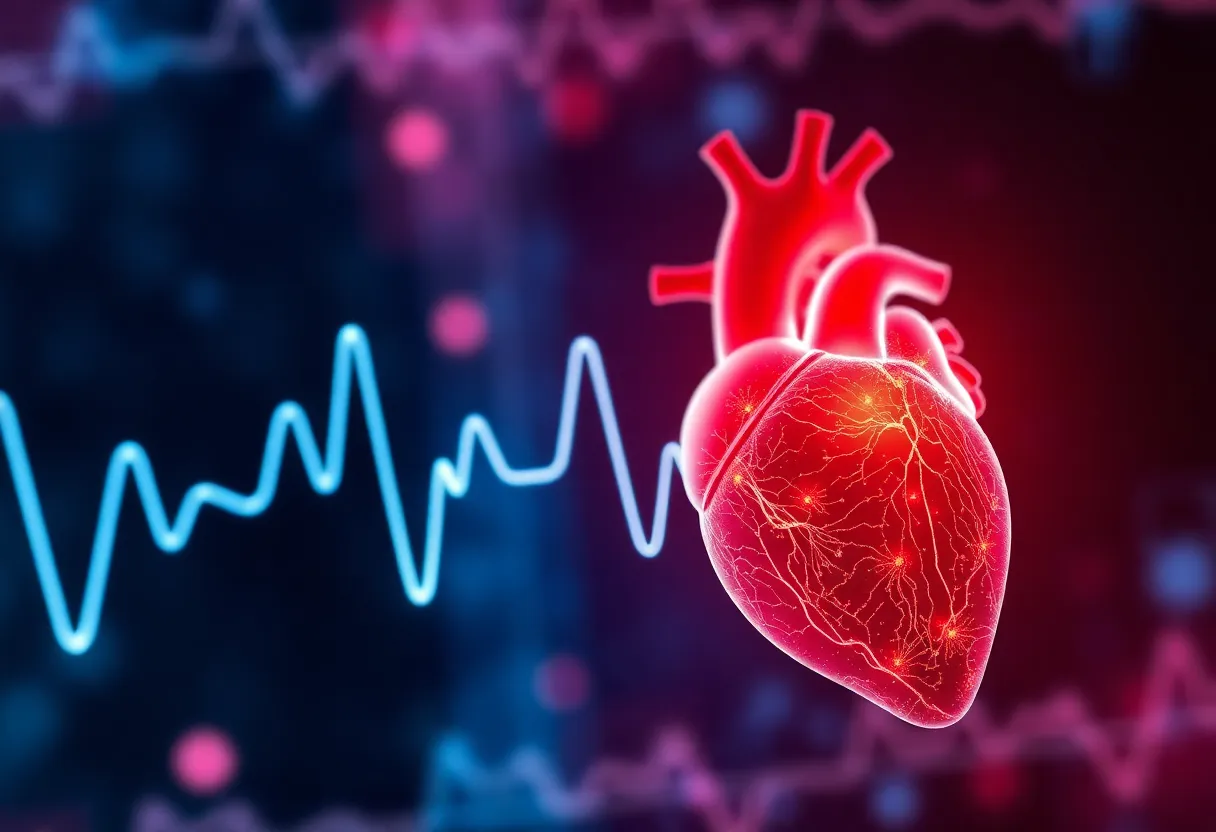
A research scientist at Ohio State University is advancing the understanding of atrial fibrillation (AF) through groundbreaking simulations. Utilizing supercomputing resources, Nicolae Moise’s study investigates the interaction between short-term cardiac activity and long-term tissue changes, which is essential for developing effective treatment strategies for AF. The innovative simulations, which last up to 24 hours, provide crucial insights into the heart’s electrical activity, shedding light on health risks associated with arrhythmias and stroke. This research may facilitate the creation of improved treatments for this common condition.
Columbus, Ohio – Research scientist Nicolae Moise from the Department of Biomedical Engineering at Ohio State University (OSU) is advancing the understanding of atrial fibrillation (AF), a common heart arrhythmia, through his use of cutting-edge supercomputing resources. His recent study, published in the JACC: Clinical Electrophysiology, explores how short-term cardiac activity influences long-term changes in cardiac tissue, which is critical for creating more effective treatment strategies for AF.
Utilizing models of cardiac electrophysiology, Moise was able to simulate the heart’s electrical activity continuously for up to 24 hours. These simulations are the longest to date and were made possible through the use of advanced high-performance computing resources including the NCSA Delta supercomputer and GPUs from the OSC. By employing CUDA code on NVIDIA GPUs, Moise achieved a remarkable speed increase of around 250 times compared to standard personal computers. While the most extensive simulations took about one week to run on supercomputers, similar tasks could have taken years on traditional systems.
The study revealed how heart cells adapt during rapid heartbeat conditions to maintain calcium balance, which creates a feedback loop that heightens the risk of arrhythmias. Moise emphasizes that early detection and intervention for atrial fibrillation are crucial to preventing its progression and associated health complications, such as stroke.
This research not only elucidates the mechanisms behind AF but may also lead to enhanced treatment options and the development of new medications. Future studies will focus on integrating potential treatments into simulations and further validating the findings through experimental methods. Earlier work by Moise’s team, published in the Biophysical Journal, laid the groundwork for this significant research.
The implications of this work are profound, underscoring the need for innovative approaches in understanding and managing atrial fibrillation, a condition that affects millions of people worldwide.
Key Features of Moise’s Research
- Research Focus: Long-term progression of atrial fibrillation (AF)
- Publication: JACC: Clinical Electrophysiology
- Simulation Duration: Up to 24 hours of continuous heart activity
- Computing Resources: NCSA Delta supercomputer and OSC GPUs
- Speed Increase: Approximately 250 times faster than standard computers
- Heart Cell Adaptations: Balancing calcium levels during rapid heartbeats
- Health Risks: Increased susceptibility to arrhythmias and stroke
- Future Research: Testing potential treatments through simulations
FAQs
What does Nicolae Moise’s research focus on?
Moise’s research focuses on the long-term progression of atrial fibrillation (AF).
Where was Moise’s research published?
The research was published in JACC: Clinical Electrophysiology.
What technology did Moise utilize for his simulations?
Moise utilized high-performance computing resources, specifically the NCSA Delta supercomputer and OSC GPUs, to perform these complex simulations.
What is the significance of this research?
This research emphasizes the importance of early detection and treatment of atrial fibrillation to prevent its progression and associated health risks, including stroke.
Key Features Chart
| Feature | Description |
|---|---|
| Research Focus | Long-term progression of atrial fibrillation (AF) |
| Publication | JACC: Clinical Electrophysiology |
| Simulation Duration | Up to 24 hours of continuous heart activity |
| Computing Resources | NCSA Delta supercomputer and OSC GPUs |
| Speed Increase | Approximately 250 times faster than standard computers |
| Heart Cell Adaptations | Balancing calcium levels during rapid heartbeats |
| Health Risks | Increased susceptibility to arrhythmias and stroke |
| Future Research | Testing potential treatments through simulations |
Deeper Dive: News & Info About This Topic
HERE Resources
Additional Resources
- Inside HPC: NCSA and Ohio Supercomputer Center HPC Take on Atrial Fibrillation
- Wikipedia: Atrial Fibrillation
- Intel Newsroom: Intel and Ohio Supercomputer Center Double AI Processing Power
- Google Search: Atrial Fibrillation
- HPC Wire: Open OnDemand Version 4.0 Advances HPC
- Google Scholar: Atrial Fibrillation
- Ohio Tech News: NSF Awards $5M to Expand Popular HPC Web Portal Open OnDemand
- Encyclopedia Britannica: Atrial Fibrillation
- Data Center Dynamics: Ohio Supercomputer Center Adds New Cardinal HPC Cluster
- Google News: Atrial Fibrillation

Author: STAFF HERE COLLEGE WRITER
The COLLEGE STATION STAFF WRITER represents the experienced team at HERECollegeStation.com, your go-to source for actionable local news and information in College Station, Brazos County, and beyond. Specializing in "news you can use," we cover essential topics like product reviews for personal and business needs, local business directories, politics, real estate trends, neighborhood insights, and state news affecting the area—with deep expertise drawn from years of dedicated reporting and strong community input, including local press releases and business updates. We deliver top reporting on high-value events such as the Brazos Valley Fair & Rodeo, Chilifest, and Aggie Muster. Our coverage extends to key organizations like the Bryan-College Station Chamber of Commerce and United Way of the Brazos Valley, plus leading businesses in education, biotechnology, and retail that power the local economy such as Texas A&M University, Fujifilm Diosynth Biotechnologies, and H-E-B. As part of the broader HERE network, including HEREAustinTX.com, HEREDallas.com, HEREHouston.com, and HERESanAntonio.com, we provide comprehensive, credible insights into Texas's dynamic landscape.