

News Summary
In response to a surge in the mosquito population following recent rainfall, College Station is providing free mosquito dunks to residents. This initiative aims to control mosquito larvae effectively, particularly in standing water sources. The city encourages prompt requests for these dunks due to limited supply. Experts also emphasize the need for proper mosquito control methods and recommend strategies for residents to mitigate the risks associated with mosquitoes as outdoor activities increase in warm weather.
College Station Offers Free Mosquito Dunks Amid Rising Mosquito Population Following Recent Rainfall
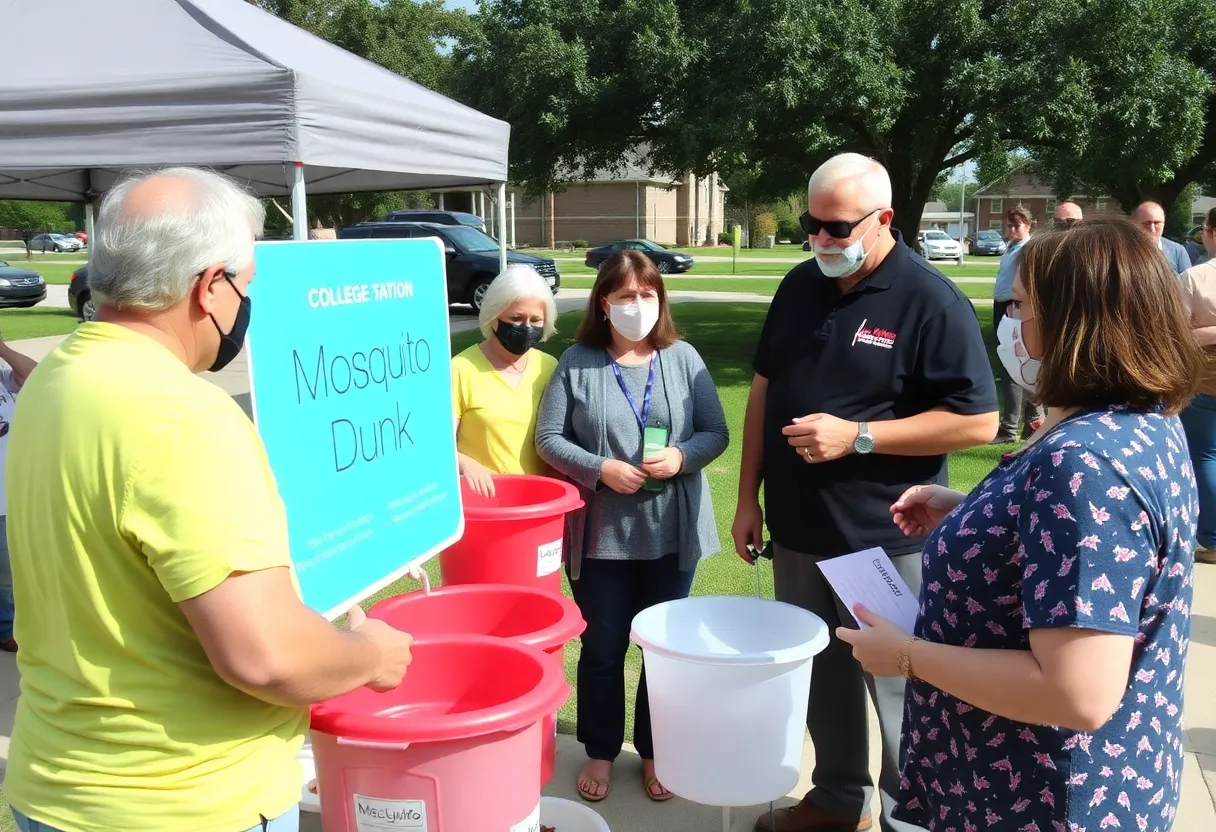
College Station is taking proactive measures to combat a growing mosquito problem following recent rainfall in the Brazos Valley. The City is offering free mosquito dunks to residents as part of its mosquito control initiative to mitigate the increasing population of these pests.
With the recent rains creating ideal breeding conditions for mosquitoes, the City is encouraging residents to take advantage of the free mosquito dunks, which are timely solutions for controlling mosquito larvae. These dunks are particularly effective when placed in standing water sources such as bird baths, small ponds, and gutters, as they prevent the development of larvae for up to 60 days, making them a practical option for homeowners.
Residents interested in acquiring these mosquito dunks can request them from the City; however, it is important to act quickly, as supply is limited. The City advises that prompt requests should be made to ensure availability. The warm and humid weather experienced in the region not only provides pleasant conditions for outdoor activities but also creates an environment conducive to mosquito proliferation.
Mosquito Control Insights
In addition to the City’s initiative, experts emphasize the need for effective mosquito control methods. Dr. Jim Olson, a former entomologist with Texas A&M University, has highlighted the ineffectiveness of many common mosquito prevention devices available on the market. While some gadgets claim to repel mosquitoes, they often attract more of the pests to outdoor spaces rather than keep them away.
Particularly, sonic repellents, which produce high-frequency sounds aimed at deterring mosquitoes, have been found ineffective. Female mosquitoes are more attracted to carbon dioxide and heat produced by humans than to any sounds made by male mosquitoes. Additionally, while propane-powered traps can draw mosquitoes using carbon dioxide, they may not significantly reduce overall populations, leading to further challenges in mosquito management.
Concerns have also been raised regarding pesticide misting devices, which indiscriminately spray chemicals and may pose health risks to residents. In light of these observations, experts recommend a combination of personal caution and community awareness to mitigate the risks associated with mosquito bites.
Effective Prevention Strategies
The guide to effective mosquito prevention includes several straightforward strategies. Residents are recommended to limit outdoor activities during peak mosquito activity hours, which typically occur at dawn and dusk. Proven repellents containing DEET remain effective against bites and should be applied when spending time outdoors.
Moreover, eliminating standing water around residences is crucial, as such areas serve as breeding grounds for mosquitoes. For standing water that cannot be drained, mosquito dunks are an ideal solution. These dunks employ Bacillus thuringiensis israelensis (Bti), a bacterially derived pesticide that is safe for humans and non-target organisms, making it a responsible choice for controlling mosquito populations.
Citronella candles can also provide some level of repellent action, although their effectiveness diminishes in windy conditions. The combination of public initiatives like the distribution of mosquito dunks, along with conscientious individual efforts, plays a vital role in minimizing mosquito populations and protecting public health.
Conclusion
As the warm season continues, it is essential for the residents of College Station to stay informed about mosquito control practices and take advantage of resources like the free mosquito dunks available from the City. Through collective action and awareness, the community can work towards reducing mosquito-borne health risks and enhancing outdoor enjoyment during this season.
Deeper Dive: News & Info About This Topic
HERE Resources
Urban Pest Management Conference Announced for January 2025
Additional Resources
- KBTX: College Station Offers Free Mosquito Dunks
- Wikipedia: Mosquito Control
- KSST Radio: Mosquito Control in Texas
- Google Search: Mosquito Control in Texas
- KBTX: College Station Police Arrest Suspected Drug Dealer
- Google Scholar: College Station Mosquito Control
- KBTX: Rock Prairie Behavioral Health Closure
- Encyclopedia Britannica: Texas Mosquito Control
- KBTX: Lauren Walsh Author Page
- Google News: Mosquito Control News


Author: STAFF HERE COLLEGE WRITER
The COLLEGE STATION STAFF WRITER represents the experienced team at HERECollegeStation.com, your go-to source for actionable local news and information in College Station, Brazos County, and beyond. Specializing in "news you can use," we cover essential topics like product reviews for personal and business needs, local business directories, politics, real estate trends, neighborhood insights, and state news affecting the area—with deep expertise drawn from years of dedicated reporting and strong community input, including local press releases and business updates. We deliver top reporting on high-value events such as the Brazos Valley Fair & Rodeo, Chilifest, and Aggie Muster. Our coverage extends to key organizations like the Bryan-College Station Chamber of Commerce and United Way of the Brazos Valley, plus leading businesses in education, biotechnology, and retail that power the local economy such as Texas A&M University, Fujifilm Diosynth Biotechnologies, and H-E-B. As part of the broader HERE network, including HEREAustinTX.com, HEREDallas.com, HEREHouston.com, and HERESanAntonio.com, we provide comprehensive, credible insights into Texas's dynamic landscape.