
News Summary
Samsung Electronics is facing significant challenges as it prepares to establish a major chip manufacturing plant in Texas. A recent report highlights a 55% drop in profits, primarily due to U.S. export controls and decreased demand. Although the tech giant has secured a major deal with Tesla worth $16.5 billion, delays in the plant’s timeline and struggles to align production capabilities with market needs add to the uncertainty. Despite these difficulties, Samsung remains hopeful about future collaborations and improving operations, all eyes are now on Texas for the next steps.
Texas Faces Challenges as Samsung Electronics Delays Construction of AI Chip Plant
Samsung Electronics, the world’s leading memory chip and smartphone manufacturer, is grappling with significant challenges as it prepares to delay the operations of its new semiconductor plant in Texas. The company has faced a staggering 55% drop in profit for the second quarter, reporting an operating profit of $3.4 billion, down from $7.5 billion a year prior.
The declines are even sharper within Samsung’s chipmaking operations, which experienced a drastic 93.8% decrease in profit, falling to $286.5 million from $4.6 billion compared to the same quarter last year. Additionally, total chip revenue dropped slightly, from $20.5 billion to $20 billion, indicating ongoing difficulties in the sector.
These financial setbacks have been attributed to various factors including U.S. export controls, weak demand within the market, and low production levels at the company’s foundries. Compounding these issues, Samsung has indicated challenges related to supply chain disruptions and a mismatch between current technological needs and the capabilities of the planned chip plant.
Future Prospects and Major Contracts
In light of these challenges, Samsung has sought to secure contracts to boost its operations. Recently, the company announced a major deal valued at $16.5 billion with Tesla Inc. to supply advanced chips intended for artificial intelligence tasks in vehicles, robots, and data centers. This agreement marks a critical step for Samsung as it attempts to align its Texas operations—which will focus on manufacturing next-generation AI chips—with customer demand.
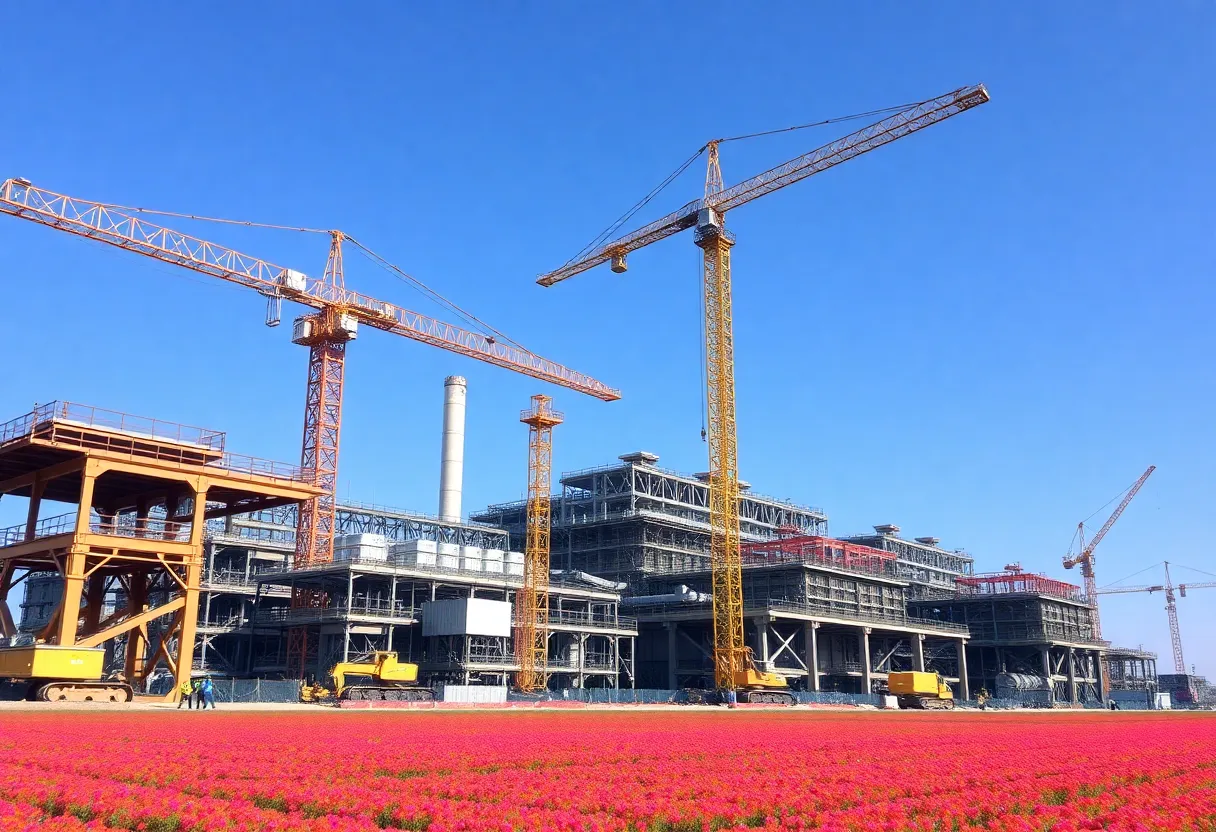
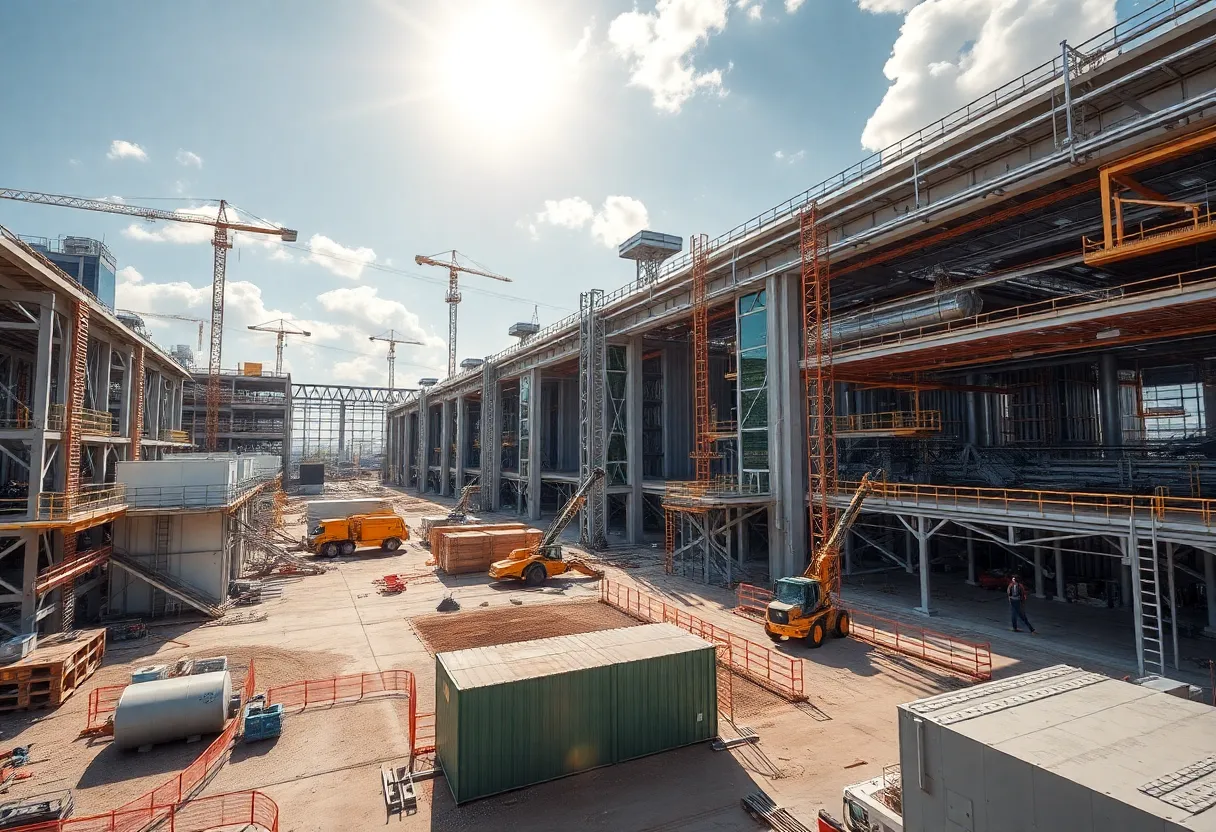
Construction on the new Taylor fab in Texas began in 2022, initially planned to commence operations in 2024. However, due to difficulties in securing confirmed customers, the timeline has now been pushed back to 2026. The facility, which spans an area of 1,000 acres near U.S. 79 and County Road 401, represents the largest foreign direct investment ever made in Texas, as stated by state officials. The initial investment of $17 billion has now expanded to a projected total of $44 billion to enhance the plant’s capabilities.
Competitive Landscape
The delay in the Taylor plant’s operations has raised concerns about Samsung’s position in the semiconductor market. Currently, Samsung’s share in the global foundry market has declined to 7.7%, while the Taiwan Semiconductor Manufacturing Company (TSMC) dominates with nearly 68% market share. Reports suggest that the Taylor facility has had “virtually no customers” prior to the Tesla deal, making it essential for Samsung to attract additional clients in the U.S. to maintain operational efficiency and profitability.
Furthermore, geopolitical uncertainties, particularly the evolving U.S.-China technology rivalry, along with potential semiconductor tariffs, are additional threats to Samsung’s prospects in the chip sector. A proposed 15% tariff on semiconductor imports from South Korea could significantly affect Samsung’s performance as a major exporter.
Support from the U.S. Government
In a bid to bolster domestic chip manufacturing, the Biden administration has extended support to Samsung’s Texas semiconductor facilities through the CHIPS Act, offering $4.75 billion in funding. This assistance underscores the strategic importance of semiconductor manufacturing for the U.S. economy and national security.
Samsung’s shares took a hit following the release of its financial reports, dropping 1.65% on the Korean Stock Exchange. Despite the numerous hurdles, the company remains optimistic about future collaborations to improve the utilization and financial performance of the Texas facility.
The evolving dynamics of the semiconductor industry, coupled with strategic partnerships and government support, will play a crucial role in determining the success of Samsung’s operations in Texas and its broader global standing.
Deeper Dive: News & Info About This Topic
- Reuters: Tesla-Samsung Deal
- Wikipedia: Samsung Electronics
- Nikkei: Samsung Chip Plant Delay
- Google Search: Samsung Chip Plant Delay
- The Guardian: Musk’s $165bn Samsung Deal
- Encyclopedia Britannica: Semiconductor
- Tom’s Hardware: Samsung Chip Fab Delay
- Google News: Samsung Chip Fab Delay
- Statesman: Samsung Profit Drops
- Google Scholar: Samsung Electronics
- Bloomberg: Samsung’s $16.5 Billion Deal
- Google Search: Samsung $16.5 Billion Deal


Author: STAFF HERE COLLEGE WRITER
The COLLEGE STATION STAFF WRITER represents the experienced team at HERECollegeStation.com, your go-to source for actionable local news and information in College Station, Brazos County, and beyond. Specializing in "news you can use," we cover essential topics like product reviews for personal and business needs, local business directories, politics, real estate trends, neighborhood insights, and state news affecting the area—with deep expertise drawn from years of dedicated reporting and strong community input, including local press releases and business updates. We deliver top reporting on high-value events such as the Brazos Valley Fair & Rodeo, Chilifest, and Aggie Muster. Our coverage extends to key organizations like the Bryan-College Station Chamber of Commerce and United Way of the Brazos Valley, plus leading businesses in education, biotechnology, and retail that power the local economy such as Texas A&M University, Fujifilm Diosynth Biotechnologies, and H-E-B. As part of the broader HERE network, including HEREAustinTX.com, HEREDallas.com, HEREHouston.com, and HERESanAntonio.com, we provide comprehensive, credible insights into Texas's dynamic landscape.