
News Summary
Tesla has secured a permit to launch its robotaxi services in Austin, Texas. The initiative allows Tesla’s Model Y vehicles equipped with Full Self-Driving software to operate in an 80-square-mile area. Although these rides initially cater to a select group, plans for expansion are underway. Elon Musk aims to expand the service beyond Austin and employ more personnel in various states. As regulations evolve, competition in the robotaxi space heats up, marking a new era for transportation in Texas.
Texas has taken a significant step in the realm of autonomous transport as Tesla Inc. has received a state permit to operate its popular Robotaxi service within the state. The Texas Department of Licensing and Regulation (TDLR) issued the operating license to Tesla Robotaxi LLC, allowing the firm to function as a transportation network company similar to Uber or Lyft. This pivotal license, awarded on June 25, 2025, is valid for one year.
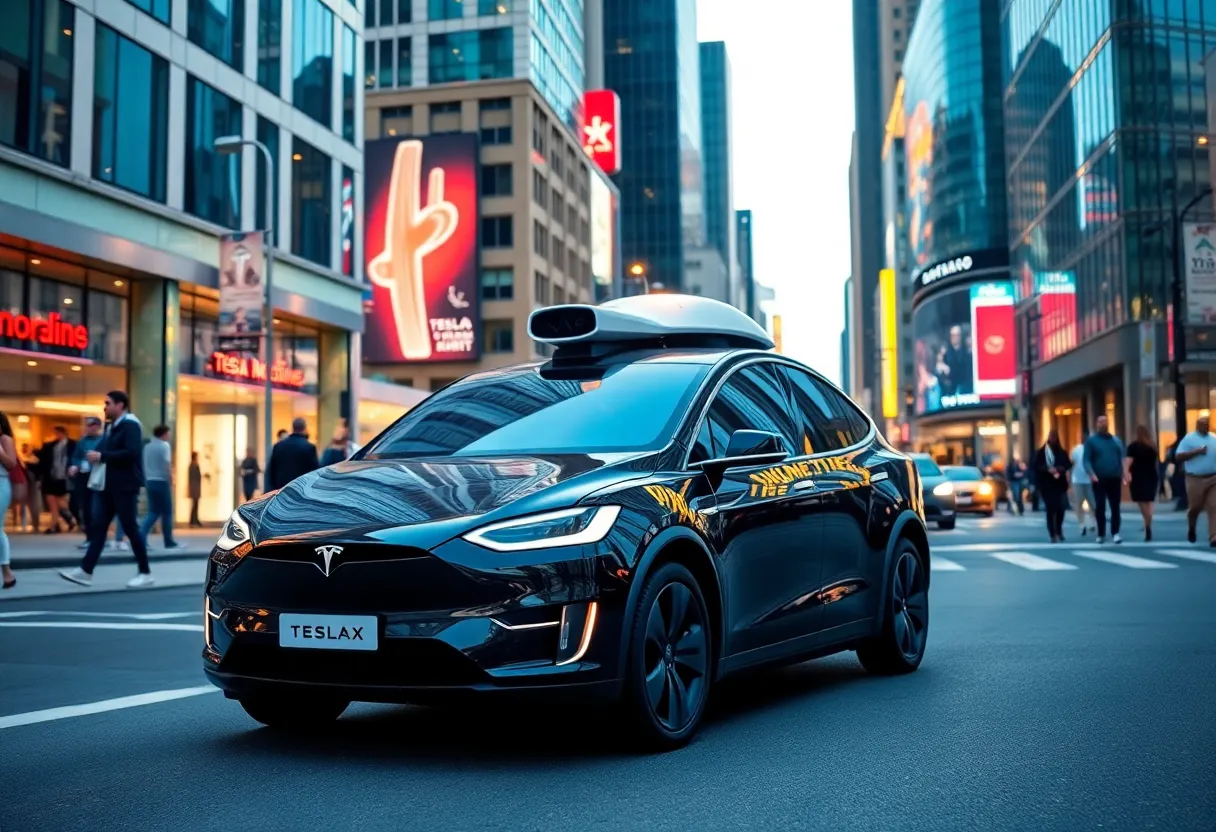
Nonetheless, it is important to clarify that this permit does not classify Tesla’s robotaxis as fully autonomous vehicles. In a bid to launch this service before forthcoming state regulations take effect on September 1, 2025, Tesla has initiated limited robotaxi rides in Austin, which currently include a safety moderator occupying the front passenger seat. These rides commenced in late June 2025 and employ Model Y vehicles that are outfitted with Full Self-Driving software.
Recently, the operational zone for the robotaxi service has been extended to cover approximately 80 square miles in Austin. However, access is presently restricted to select influencers and brand enthusiasts, a strategy that allows these individuals to promote Tesla products online in exchange for compensation.
The TDLR permit allows Tesla to run its driverless vehicles commercially. However, in order for these vehicles to be recognized as fully autonomous, additional authorization from the Department of Motor Vehicles (DMV) is still required. Recent changes in legislation have updated Texas’s 2017 framework governing autonomous vehicle operations. This legislation has altered regulatory control, preventing local municipalities from enacting their own laws in this area, thus centralizing authority within the state.
Under the updated law, companies must secure DMV authorization prior to deploying fully autonomous vehicles that do not include human operators on public roads. Tesla finds itself in a competitive landscape, with other firms such as Waymo and Amazon’s Zoox also progressing with the testing and expansion of their autonomous passenger services, particularly in the Austin area.
In light of new regulatory requirements, Austin’s Democratic lawmakers previously requested Tesla to postpone its robotaxi operation until it could ensure complete compliance. Tesla’s CEO, Elon Musk, has expressed ambition for the robotaxi service to be available to over half the U.S. population by the end of 2025. However, these aspirations have faced delays largely due to the evolving regulatory environment.
In addition to operations in Texas, Tesla has recently launched a similar robotaxi service in the San Francisco Bay Area, albeit with a limited user base and restrictions comparable to those in Austin. Furthermore, the company has submitted applications for operational permits in other states such as Nevada, Florida, and elsewhere, with plans for geographical expansion already underway.
As part of its growing robotaxi service, Tesla is currently scouting for vehicle operators to join its Autopilot and Robotaxi services across various locations, including New York, Arizona, and Nevada. The company is also advancing its robotaxi fleet expansion in California, with a goal of deploying over 100 Tesla vehicles for autonomous ride-hailing services.
To achieve these objectives, Tesla is seeking to hire Data Collection Supervisors tasked with managing vehicle testing and data compilation for its autonomous systems. The pressing momentum in the autonomous transport domain is indicative of evolving consumer preferences and technological advancements, making Texas a crucial player in this burgeoning industry.
Deeper Dive: News & Info About This Topic
- Austin American-Statesman
- Tesla Oracle
- The Verge
- CNN Business
- Reuters
- Wikipedia: Autonomous vehicle
- Google Search: Tesla Robotaxi
- Google Scholar: Tesla Robotaxi service
- Encyclopedia Britannica: robotaxis
- Google News: Tesla Robotaxi


Author: STAFF HERE COLLEGE WRITER
The COLLEGE STATION STAFF WRITER represents the experienced team at HERECollegeStation.com, your go-to source for actionable local news and information in College Station, Brazos County, and beyond. Specializing in "news you can use," we cover essential topics like product reviews for personal and business needs, local business directories, politics, real estate trends, neighborhood insights, and state news affecting the area—with deep expertise drawn from years of dedicated reporting and strong community input, including local press releases and business updates. We deliver top reporting on high-value events such as the Brazos Valley Fair & Rodeo, Chilifest, and Aggie Muster. Our coverage extends to key organizations like the Bryan-College Station Chamber of Commerce and United Way of the Brazos Valley, plus leading businesses in education, biotechnology, and retail that power the local economy such as Texas A&M University, Fujifilm Diosynth Biotechnologies, and H-E-B. As part of the broader HERE network, including HEREAustinTX.com, HEREDallas.com, HEREHouston.com, and HERESanAntonio.com, we provide comprehensive, credible insights into Texas's dynamic landscape.