
News Summary
The Texas A&M Student Government Association elections concluded with low voter turnout and multiple controversies. Reports of campaign rule violations soared to 104, causing concerns among students and faculty. The election featured a disqualified candidate and questionable campaigning tactics, including the purchase of student contact information. Despite the controversies, the SGA Election Commission deemed these tactics legal. With only 11,294 eligible ballots cast out of approximately 80,000 students, calls for ethical leadership and improved electoral processes are growing.
Texas A&M’s Wild Election Wrap-Up: Controversy and Low Turnout
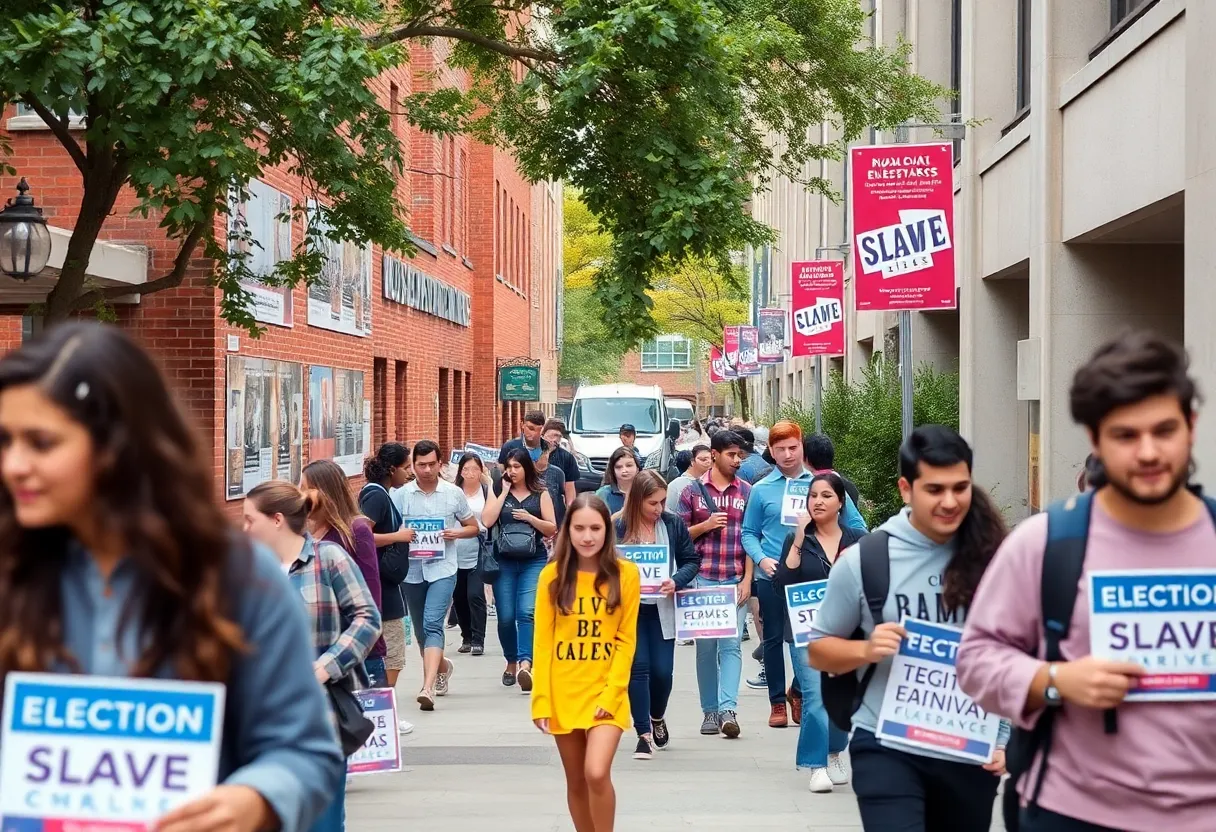
The spring Student Government Association (SGA) election cycle at Texas A&M has finally reached its conclusion, and students are breathing a sigh of relief. After weeks of intense campaigning that filled the campus with activity, the usual hustle and bustle around the Memorial Student Center has come to a halt. However, it wasn’t all smooth sailing, as the election season was marred by numerous controversies and reported violations.
Reports of Rule Violations Pile Up
During the election period, a staggering 104 reports of alleged campaign rule violations were documented. This raised eyebrows among students and faculty alike, leading many to wonder what was happening behind the scenes. Amidst all the chaos, the SGA Election Commission identified four minor violations against candidates, and one candidate was disqualified from the Student Senate race. The majority of reported incidents, however, did not lead to any official action, suggesting that some complaints may not have been as serious as they seemed.
Speculation about these high numbers points to the possibility that the anonymous reporting system might have been misused to undermine opponents or that legitimate claims were simply lacking the necessary evidence to warrant action. The controversies don’t stop there! A court case is currently being reviewed by the SGA’s Judicial Court concerning alleged violations involving former student body president candidates and their campaign groups.
Texting Tactics Raise Eyebrows
In a notable turn of events, student body president candidate Colton Whisenant and his running mate Brock Barrington adopted a controversial campaigning tactic by sending text messages directly to students. They were not just asking for votes—they wanted to hear concerns. This strategy led to a flurry of questions among students, who were puzzled about how their contact information was sourced, with many recalling they had never shared it. Upon inspection of Whisenant’s financial reports, it surfaced that they purchased open records requests from Texas A&M. Talk about a bold move!
Despite the murmurings from students about privacy concerns, the SGA Election Commission ruled that this method of campaigning did not violate any laws or regulations. Unfortunately, this isn’t new territory; issues of unethical online campaigning and mass texting have been making waves in recent SGA elections.
The Stakes of Student Body Politics
Why are students resorting to tactics that raise eyebrows? The perks of winning an SGA position are enticing. Gaining influence and connections can outweigh the risks of playing dirty, leading to a highly competitive election atmosphere. However, this year’s voter turnout told a different story. Out of nearly 80,000 enrolled students, only 11,294 eligible ballots were cast for the student body president election. This shows a noticeable drop in engagement and raises questions about whether candidates can truly represent the student body when so few participate in deciding their leadership.
Campaign Spending and Historical Context
The average amount spent by candidates on campaign expenses soared to around $2,300. This raises eyebrows about the lengths to which some students may go to secure a victory, even leading to potential election fraud concerns. A similar incident in 2017 serves as a reminder: candidate Robert McIntosh was disqualified for voter intimidation and failure to report his campaign expenses.
Students often find themselves facing violations for a range of reasons, including failure to report spending and engaging in dubious practices. With such a backdrop, it’s crucial for students to vote responsibly and keep candidates accountable for their actions.
Calls for Improvement and Ethical Leadership
As the dust settles, there are increasing calls for the SGA to reevaluate its election policies to ensure a more fair and integrity-driven process in future elections. Students at Texas A&M have spoken up about the need for ethical leadership. It is their hope that candidates will be chosen based on their commitment to serving the student body rather than seeking personal gain. In a community as vibrant as Texas A&M’s, it’s vital for the voices of all students to be heard, now more than ever.
Deeper Dive: News & Info About This Topic
HERE Resources
Major Developments in College Station: Road Work and Fire Impact
Glenn Hegar Named Sole Finalist for Chancellor of Texas A&M
Bryan Man Arrested for Child Abuse and Violence
Glenn Hegar Selected as Finalist for Texas A&M Chancellor
New Leadership and Community Initiatives in Bryan
Brazos County Tackles Honeybee Population Decline
Glenn Hegar Named Chancellor of Texas A&M University System
College Station Updates on Water Management and Education
Texas A&M School Announce Pause on Undergrad Enrollment Growth
Brazos Valley Cities Receive Major Infrastructure Funding
Additional Resources
- GigEm Gazette
- Wikipedia: Texas A&M University
- Lion Athletics
- Google Search: Student Government Association Election Texas A&M
- New York Times
- Google Scholar: Texas A&M Student Elections
- Statesman
- Encyclopedia Britannica: Texas A&M Student Politics
- GoBuffsGo
- Google News: Texas A&M controversial election


Author: STAFF HERE COLLEGE WRITER
The COLLEGE STATION STAFF WRITER represents the experienced team at HERECollegeStation.com, your go-to source for actionable local news and information in College Station, Brazos County, and beyond. Specializing in "news you can use," we cover essential topics like product reviews for personal and business needs, local business directories, politics, real estate trends, neighborhood insights, and state news affecting the area—with deep expertise drawn from years of dedicated reporting and strong community input, including local press releases and business updates. We deliver top reporting on high-value events such as the Brazos Valley Fair & Rodeo, Chilifest, and Aggie Muster. Our coverage extends to key organizations like the Bryan-College Station Chamber of Commerce and United Way of the Brazos Valley, plus leading businesses in education, biotechnology, and retail that power the local economy such as Texas A&M University, Fujifilm Diosynth Biotechnologies, and H-E-B. As part of the broader HERE network, including HEREAustinTX.com, HEREDallas.com, HEREHouston.com, and HERESanAntonio.com, we provide comprehensive, credible insights into Texas's dynamic landscape.