
College Station, Texas, August 29, 2025
News Summary
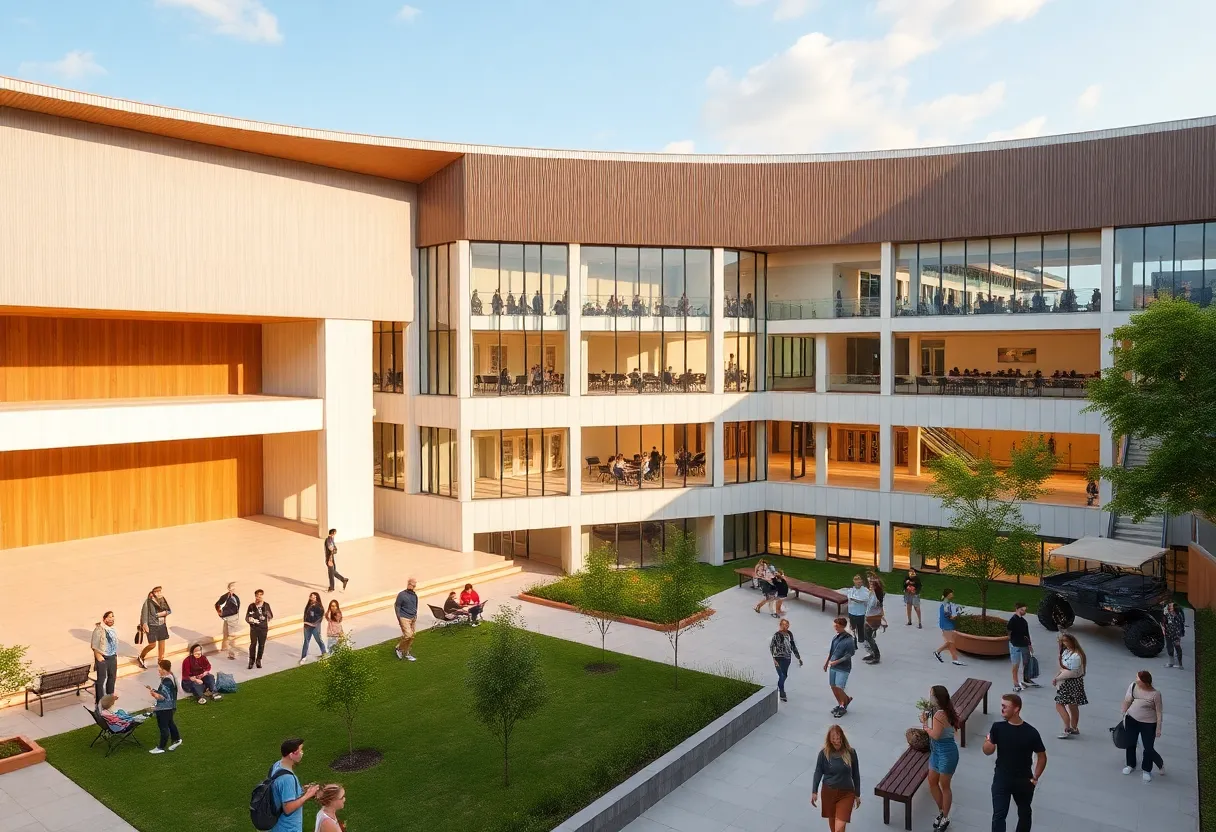
The Texas A&M University Board of Regents has approved the construction of the Aplin Center, a new $250 million facility aimed at enhancing campus life and learning. Covering nearly 212,000 square feet, the center will include various spaces such as a 100-seat theater, multipurpose rooms, immersive laboratories, and recreational areas. Funded in part by a significant donation from alumni, the Aplin Center is anticipated to positively impact student success and engagement when completed in 2028.
College Station, Texas – Texas A&M University Board of Regents Approves Aplin Center Construction
The Texas A&M Board of Regents has initiated the construction of the Aplin Center, a new facility aimed at enhancing student life and learning on campus. The center, with an estimated total cost of $250 million, is set to cover nearly 212,000 square feet and is expected to start construction in September 2025, with completion anticipated by February 2028.
Aplin Center Features
Key features of the Aplin Center include:
- A 100-seat theater designed for various presentations and student events.
- A 70-seat multipurpose room for diverse uses, including meetings and workshops.
- Immersive learning laboratories to provide hands-on experience in hospitality, retail, and food product development.
- Specialized areas for viticulture, enology, fermentation, coffee roasting, product development, and meat & food science.
- Outdoor and indoor recreational spaces for student use.
- Retail and food service areas that will be managed by students, promoting real-world experience.
Location and Design
The Aplin Center will be strategically located at the corner of John Kimbrough and Olsen Boulevards, replacing a current parking lot. The project design will be undertaken by Pickard Chilton and DLR Group, while Design Workshop will handle landscape architecture, ensuring the center aligns with modern aesthetic and functional standards.
Funding and Contributions
Arch “Beaver” Aplin III, the CEO of Buc-ee’s and an alumnus of the university, has made a significant contribution of $50 million towards the center’s construction. This donation is one of the largest received by Texas A&M from a single donor, reflecting the commitment to enhancing student engagement and educational opportunities.
Anticipated Impact
The Aplin Center is designed to serve as a welcome center that aims to drive student success and nurture campus life through its diverse offerings. Texas A&M Chancellor Glen Hegar’s office highlighted that the center will meet long-standing campus needs while showcasing innovative educational programs. The project also emphasizes sustainability and innovation in its construction strategy, in collaboration with the real estate investment management firm Hines.
Additional Updates from the Regents Meeting
Along with the approval of the Aplin Center, the Board of Regents also confirmed a tuition and fees freeze for the upcoming 2025-2026 and 2026-2027 academic years. The construction of the Aplin Center has been planned since 2022, and preparatory activities have already commenced, focusing on closing the existing parking lot and making site preparations.
Conclusion
Texas A&M President Mark A. Welsh acknowledged the generosity behind the Aplin Center and its anticipated positive influence on future generations of Aggies, reiterating the university’s commitment to fostering an enriched learning environment.
FAQ
-
What is the purpose of the Aplin Center?
The Aplin Center is designed to enhance student success and campus life through various educational and recreational facilities.
-
When will construction of the Aplin Center begin?
Construction is set to begin in September 2025.
-
What are some key features of the Aplin Center?
It will include a theater, multipurpose room, immersive learning laboratories, and recreational spaces, among other features.
-
Who funded the Aplin Center?
Arch “Beaver” Aplin III, CEO of Buc-ee’s and a former student at Texas A&M, contributed $50 million towards the project.
-
How large will the Aplin Center be?
The center is planned to cover nearly 212,000 square feet.
Key Features of Aplin Center
| Feature | Description |
|---|---|
| Theater | 100-seat facility for presentations and events |
| Multipurpose Room | 70-seat space for meetings and workshops |
| Learning Laboratories | Hands-on experience in various fields including hospitality and food science |
| Recreational Spaces | Outdoor and indoor areas for student activities |
| Student-managed Areas | Retail and food service outlets run by students |
Deeper Dive: News & Info About This Topic
HERE Resources
Additional Resources
- KBTX: Texas A&M Board of Regents Approves $250M Aplin Center Construction
- The Eagle: Texas A&M Aplin Center News
- Fox 7 Austin: Buc-ee’s Founder Donates to Aplin Center
- Wikipedia: Texas A&M University
- Google Search: Texas A&M Aplin Center

Author: STAFF HERE COLLEGE WRITER
The COLLEGE STATION STAFF WRITER represents the experienced team at HERECollegeStation.com, your go-to source for actionable local news and information in College Station, Brazos County, and beyond. Specializing in "news you can use," we cover essential topics like product reviews for personal and business needs, local business directories, politics, real estate trends, neighborhood insights, and state news affecting the area—with deep expertise drawn from years of dedicated reporting and strong community input, including local press releases and business updates. We deliver top reporting on high-value events such as the Brazos Valley Fair & Rodeo, Chilifest, and Aggie Muster. Our coverage extends to key organizations like the Bryan-College Station Chamber of Commerce and United Way of the Brazos Valley, plus leading businesses in education, biotechnology, and retail that power the local economy such as Texas A&M University, Fujifilm Diosynth Biotechnologies, and H-E-B. As part of the broader HERE network, including HEREAustinTX.com, HEREDallas.com, HEREHouston.com, and HERESanAntonio.com, we provide comprehensive, credible insights into Texas's dynamic landscape.