
News Summary
Central Texas experienced devastating flooding over the weekend, resulting in 161 people missing and 110 confirmed dead. The disaster overwhelmed emergency systems and raised critical questions about the readiness of the state’s insurance sector amid rising extreme weather risks. Experts advocate for improved preparedness and construction practices to combat future natural disasters. Additionally, the political landscape complicates the insurance market, while technological advancements offer some hope for navigating the challenges ahead. Homeowners face risks from inadequate protections and fraud after disasters, emphasizing the urgency for a unified approach in addressing these issues.
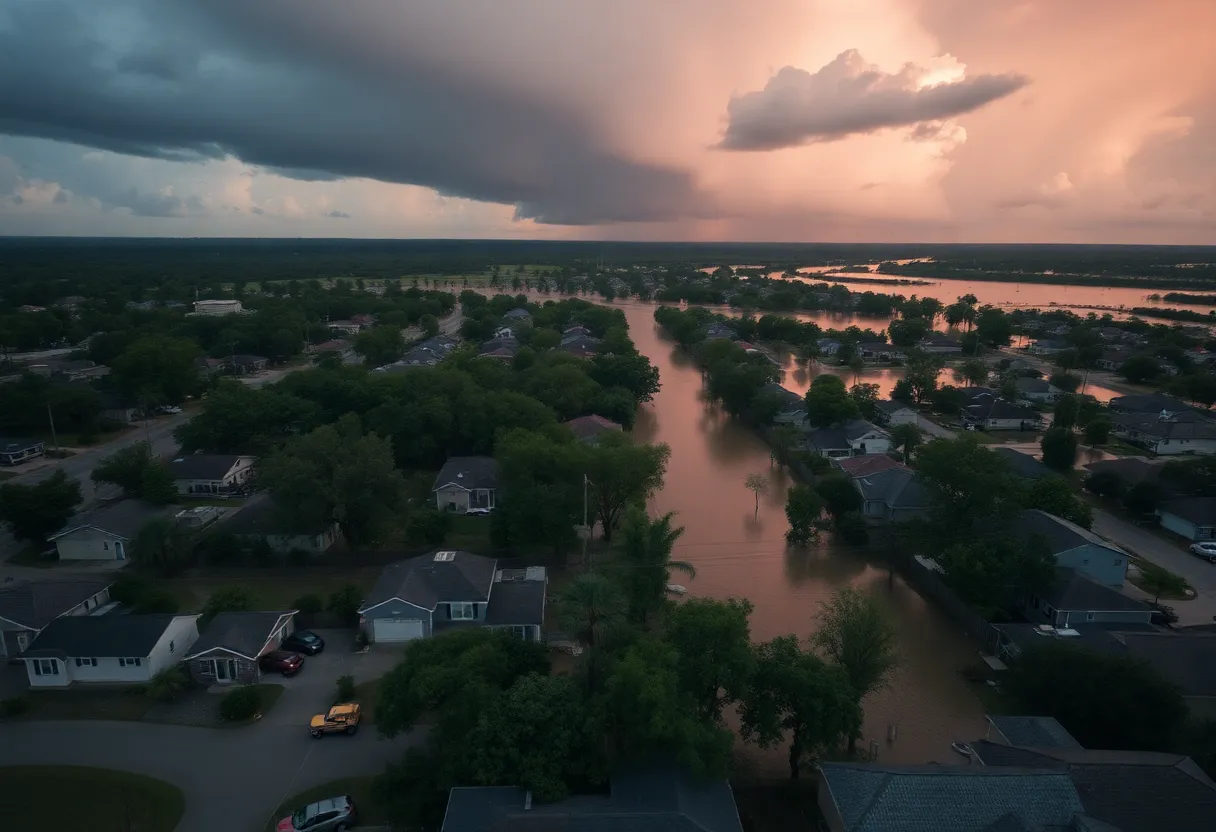
Texas is reeling from catastrophic flooding that struck Central Texas over the weekend, prompting a renewed examination of the state’s insurance sector. As emergency services continue to respond to the disaster, officials have reported that at least 161 individuals are missing and the death toll has risen to at least 110. The flooding overwhelmed emergency systems, raising urgent questions about forecasting accuracy and emergency response readiness.
Reports indicate that key positions within local National Weather Service (NWS) offices were vacant as the storm intensified. While state officials have criticized the NWS for severely underestimating rainfall amounts, former personnel have pointed to a troubling shortage of experienced professionals as a crucial contributor to the failures in forecasting.
In light of the flooding, Albert Betts, Executive Director of the Insurance Council of Texas, has noted the critical need for smarter preparations and improved construction practices to better cope with increasingly severe weather. The recent events underscore the urgency for insurance companies to adapt their strategies, particularly as extreme weather incidents—including hailstorms, hurricanes, wildfires, and floods—are becoming more frequent and damaging.
The Dallas-Fort Worth area is particularly prone to weather-related incidents such as hail and tornadoes, indicating a wider trend of worsening weather patterns across the state. Insurers are now challenged to rethink their underwriting strategies, exposure maps, coverage designs, and deductibles to remain viable in a highly volatile market.
The Texas Windstorm Insurance Association (TWIA) currently provides coverage for nearly half of the wind and hail policies, with the remainder handled by private insurers. Despite experiencing significant losses, Texas has not yet faced a major exit of insurers akin to those seen in Florida, California, or Louisiana. In fact, data shows that around 10 to 11 new property and casualty (P&C) carriers entered the Texas market last year, suggesting a level of resilience within the sector.
However, the political landscape poses risks to the insurance market’s long-term stability. Concerns arise regarding the potential consequences of lowering insurance rates without adequately considering the solvency of companies. While Texas has regulatory measures designed to ensure that rates are justified and non-discriminatory, the lack of adequate disaster mitigation strategies remains a significant worry for experts and policymakers alike.
Another area of concern is the absence of a statewide law governing post-disaster contractors, which leaves homeowners vulnerable to fraud. Recent attempts at legislation aimed at subsidizing roof retrofits have also underscored persistent gaps in protective measures for homeowners in the aftermath of storms.
As insurers increasingly turn to technology—such as artificial intelligence (AI) for pricing and automated claims processes—to enhance their competitive edge, the significance of oversight becomes apparent. These advanced systems require careful monitoring to prevent any patterns of discrimination or inequity from emerging.
The recent flooding has placed a spotlight on vulnerabilities in both infrastructure and human resources, signaling an urgent need for comprehensive emergency planning and better interagency coordination. A call for improved regulatory leadership has emerged, emphasizing the necessity of striking a balance between consumer protection and market stability for sustainable insurance practices going forward.
Given the ongoing threat of severe weather, experts insist that a robust approach from lawmakers, regulators, and insurance companies is crucial. This collaborative effort is essential to foster resilience within Texas communities. Understanding flood risk is imperative for homeowners, who are encouraged to consider securing supplementary flood insurance, even if they do not reside in designated flood zones.
Additionally, there is a notable difference between FEMA’s estimates of flood risk and those provided by other data sources, underscoring the importance for homeowners to independently assess their risk levels. The economic implications resulting from inadequate insurance coverage following a disaster can significantly hinder recovery efforts, further stressing the need for robust insurance options. Ultimately, insurance continues to be a vital line of defense against the financial ruin that can stem from severe weather events.
Deeper Dive: News & Info About This Topic
- NBC News: Texas Flooding
- Wikipedia: Flood Insurance
- Realtor.com: Texas Flood Insurance Claims
- Google Search: Texas Floods Insurance
- Dallas News: Weather and Flood Insurance
- Google Scholar: Texas Flood Risk
- Austin American-Statesman: Filing Flood Claims
- Encyclopedia Britannica: Weather
- USA Today: Risks of Texas Floods
- Google News: Texas Flooding


Author: STAFF HERE COLLEGE WRITER
The COLLEGE STATION STAFF WRITER represents the experienced team at HERECollegeStation.com, your go-to source for actionable local news and information in College Station, Brazos County, and beyond. Specializing in "news you can use," we cover essential topics like product reviews for personal and business needs, local business directories, politics, real estate trends, neighborhood insights, and state news affecting the area—with deep expertise drawn from years of dedicated reporting and strong community input, including local press releases and business updates. We deliver top reporting on high-value events such as the Brazos Valley Fair & Rodeo, Chilifest, and Aggie Muster. Our coverage extends to key organizations like the Bryan-College Station Chamber of Commerce and United Way of the Brazos Valley, plus leading businesses in education, biotechnology, and retail that power the local economy such as Texas A&M University, Fujifilm Diosynth Biotechnologies, and H-E-B. As part of the broader HERE network, including HEREAustinTX.com, HEREDallas.com, HEREHouston.com, and HERESanAntonio.com, we provide comprehensive, credible insights into Texas's dynamic landscape.