
Texas, September 3, 2025
News Summary
Texas has approved a two-year ban on lab-grown meat sales, effective September 1, 2025. The ban aims to protect local beef producers from competition, drawing support from traditional barbecue businesses and cattle ranchers. However, legal challenges are anticipated, arguing that the ban is unconstitutional and primarily favors the cattle industry. Experts suggest the legislation may be politically motivated, as consumer interest in lab-grown meat remains low in Texas.
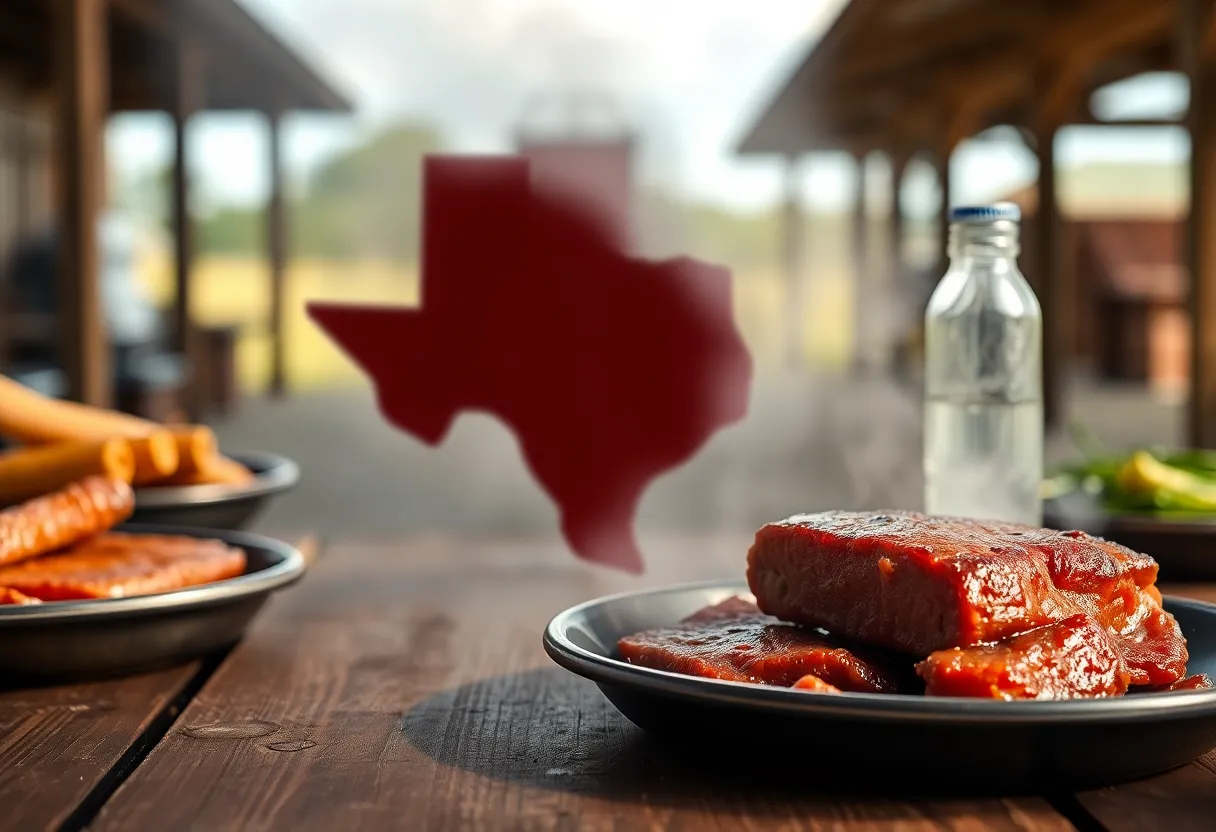
Texas has officially enacted a two-year ban on the sale of lab-grown meat, also known as cell-cultured protein, under Senate Bill 261. The prohibition will commence on September 1, 2025, and will restrict the manufacturing, processing, possession, distribution, offering for sale, or sale of lab-grown meat throughout the state. The legislation has garnered significant support from traditional barbecue establishments and cattle ranchers, who view it as a means to protect local beef producers from growing competition.
Chad Wootan, the owner of Cooper’s Old Time Pit Bar-B-Que in College Station, has expressed his support for the ban, emphasizing the need to safeguard local ranchers. Wootan stated that he has trust in the local beef industry and believes that ranchers deserve protection from the potential economic threat posed by lab-grown meat companies. Meanwhile, the Texas & Southwestern Cattle Raisers Association has voiced gratitude towards lawmakers for their backing of the ban, highlighting the dedication of cattle ranchers in producing high-quality beef.
Legal challenges are emerging against the new law, particularly from advocates who argue that the ban is unconstitutional. Paul Sherman, a senior attorney with the Institute for Justice, contends that the legislation is designed primarily to shield the cattle industry from competition rather than address any legitimate health or safety concerns regarding lab-grown meat. Sherman points out that the federal government has already approved various lab-grown meat products for interstate commerce, making the ban politically charged considering the minimal sales of lab-grown meat currently in Texas.
Otoko, an Austin-based restaurant, was the only establishment in Texas selling lab-grown meat before the enforcement of the ban. Experts have indicated that the legislation appears primarily political, given the lack of widespread consumer interest in lab-grown meat in the state. Despite this, the cultured meat industry has been viewed as a promising source of food that offers a more ethical and sustainable alternative by producing meat without animal slaughter while also potentially reducing the risks of virus transmission.
In the broader context, as of now, only four companies in the United States have the necessary government permissions to sell cultivated meat, and investment interest in the lab-grown meat sector has fluctuated significantly over the past two years. Following initial funding surges, investments have seen a notable decline. However, key approvals have been granted in recent years by the U.S. FDA and USDA, allowing sales of cell-cultivated chicken by firms like UPSIDE Foods and GOOD Meat to move forward.
Ultimately, as the two-year ban on lab-grown meat sales looms, it raises questions about the future landscape of the meat industry in Texas and how evolving food technology will be received by both consumers and producers alike.
Frequently Asked Questions (FAQ)
- What is lab-grown meat?
- Lab-grown meat, also known as cell-cultured protein, refers to meat products that are produced by culturing animal cells in a controlled environment rather than from slaughtered animals.
- When does the ban on lab-grown meat take effect in Texas?
- The ban on the sale of lab-grown meat in Texas is set to take effect on September 1, 2025.
- What does the Texas law prohibit?
- The law prohibits the manufacturing, processing, possession, distribution, offering for sale, or sale of lab-grown meat in Texas.
- Is there an economic impact expected from this ban?
- Yes, the ban aims to protect local cattle producers from potential competition posed by lab-grown meat companies, as traditional beef ranching is a significant part of Texas’s agricultural economy.
- What are the legal challenges against the ban?
- Critics argue that the ban is unconstitutional and unfairly protects the cattle industry from competition, as there are no legitimate health and safety concerns against lab-grown meat.
- Which companies currently sell lab-grown meat in the U.S.?
- Only four companies have government approval to sell cultivated meat in the United States, with some recent approvals for specific products like cell-cultivated chicken.
Key Features of the Ban
| Feature | Description |
|---|---|
| Ban Duration | 2 years (starting from September 1, 2025) |
| Prohibited Actions | Manufacturing, processing, possession, distribution, offering for sale, and sale of lab-grown meat |
| Supporters | Traditional beef industry representatives and local barbecue businesses |
| Opponents | Legal advocates claiming the ban is unconstitutional |
| Current Sales | Only a single restaurant in Texas sold lab-grown meat before the ban |
| Federal Approvals | U.S. FDA and USDA have approved lab-grown meat for commerce |
Deeper Dive: News & Info About This Topic
HERE Resources
Additional Resources
- Dallas News
- Wikipedia: Lab-grown meat
- KXXV
- Google Search: Texas lab-grown meat ban
- Audacy
- Google Scholar: Lab-grown meat industry
- Times Record News
- Encyclopedia Britannica: Lab-grown meat ban
- MSNBC Opinion
- Google News: Lab-grown meat ban Texas


Author: STAFF HERE COLLEGE WRITER
The COLLEGE STATION STAFF WRITER represents the experienced team at HERECollegeStation.com, your go-to source for actionable local news and information in College Station, Brazos County, and beyond. Specializing in "news you can use," we cover essential topics like product reviews for personal and business needs, local business directories, politics, real estate trends, neighborhood insights, and state news affecting the area—with deep expertise drawn from years of dedicated reporting and strong community input, including local press releases and business updates. We deliver top reporting on high-value events such as the Brazos Valley Fair & Rodeo, Chilifest, and Aggie Muster. Our coverage extends to key organizations like the Bryan-College Station Chamber of Commerce and United Way of the Brazos Valley, plus leading businesses in education, biotechnology, and retail that power the local economy such as Texas A&M University, Fujifilm Diosynth Biotechnologies, and H-E-B. As part of the broader HERE network, including HEREAustinTX.com, HEREDallas.com, HEREHouston.com, and HERESanAntonio.com, we provide comprehensive, credible insights into Texas's dynamic landscape.